The Complete Guide to Multi-Language AI Dubbing: A Step-by-Step Tutorial

Globalization is no longer just a challenge for large corporations. Even a small e-commerce site can attract customers from Germany, Brazil, or Japan. Multi-language AI dubbing opens the door to this global audience by automatically translating video and audio content into various languages. Historically, renting a studio and hiring professional voice actors for dubbing could take weeks and stretch budgets; this technology revolutionizes that equation.
The multi-language AI dubbing process involves three key steps: transcription, translation, and voiceover. In the first step, the original video or audio file is transcribed into text using advanced AI speech recognition technology. While manually transcribing a one-hour product demo video could take ages, artificial intelligence can accomplish this in just minutes.
Next comes the translation. In this step, the transcript is translated into the target language. The AI translation tools used here don’t simply do word-for-word translations; they also consider context and tone to maintain the essence of the original message. Finally, in the last step, the translated text is voiced by sophisticated AI models that can mimic various accents and vocal tones, resulting in a surprisingly natural sound. If you’re interested in the technical nuances of these stages, check out our piece on What is Text-to-Speech?.

So, how do you put this system into action? It all begins with picking the right platform. There are numerous options available; some cater to specific languages while others support over 50 languages. Once you’ve chosen a platform, simply upload your video or audio file, and the magic begins.
Quality platforms provide more than just automatic translations; they let you customize the target language, voiceover style, and tone of the AI voice individually. For example, you might prefer a calm and clear tone for an educational video and an energetic voice for a promotional film. Once the dubbing wraps up, you can easily download the file and upload it directly to YouTube, social media, or your corporate training platform. For those wanting to delve into other facets of audio content production, our article on How to Create AI Voiceovers for Podcasts? will also be very insightful.
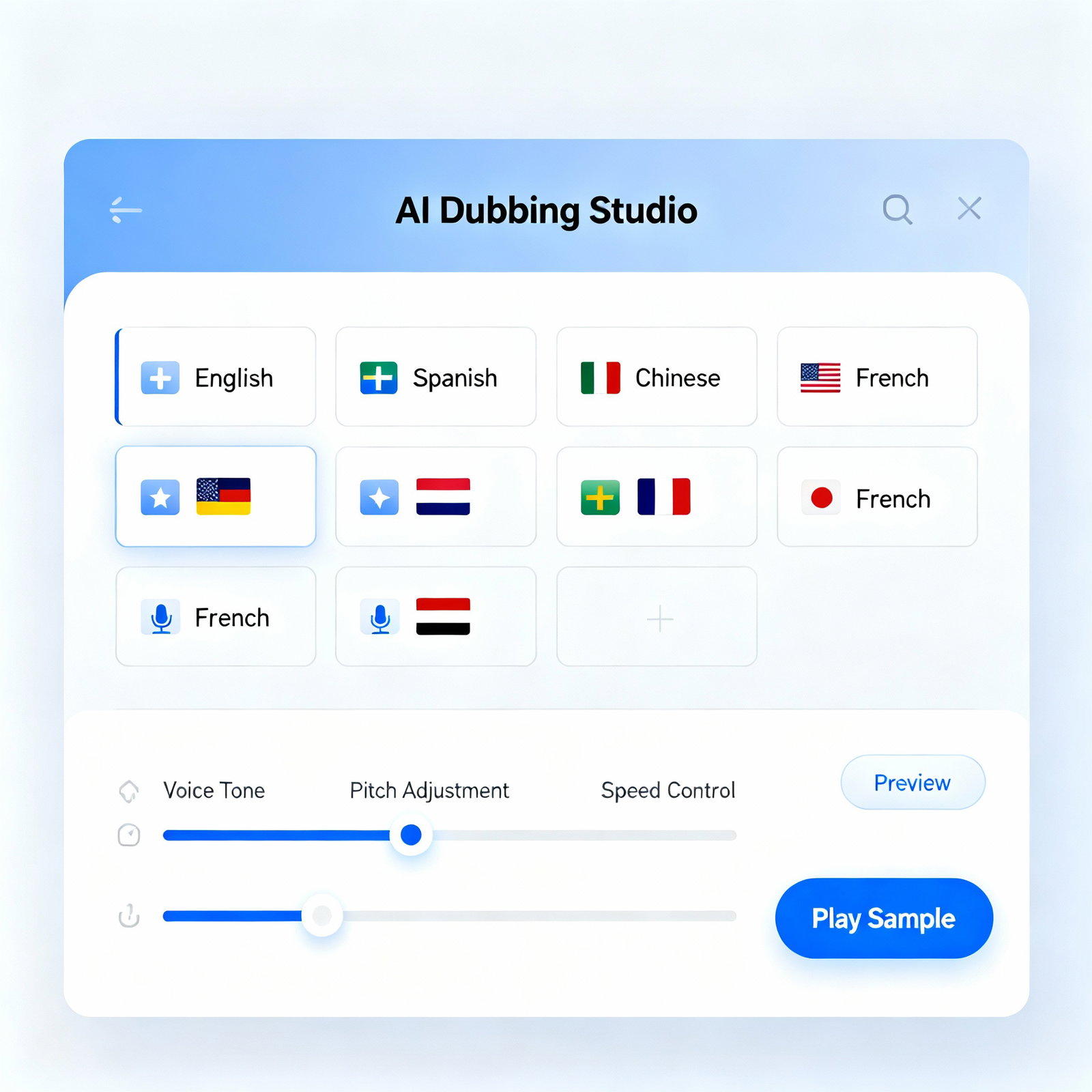
Imagine this: You start with a single product video in Turkish and have Spanish, German, and French versions ready to go on the same day. This speed is a game changer, especially during campaign periods or when entering rapidly growing markets. Competing on a global scale is achievable even without massive budgets.
You can experience this technology for yourself by visiting aibudur.com. The platform offers 50 free credits to new users, allowing you to explore a variety of tools, including multi-language AI dubbing, at no cost. You can determine which solution aligns best with your business needs.