Unlocking the Secrets: How to Detect Financial Anomalies with AI

Detecting financial anomalies is more crucial for businesses than you might realize. Even a single suspicious transaction can signal fraud, money laundering, or other illegal activities. Traditional methods for identifying these deviations are often labor-intensive and tend to reveal results only after the damage has been done.
Enter AI technologies, and everything changes. Artificial intelligence algorithms can analyze thousands of transactions in mere seconds to pinpoint abnormal patterns. If a company processes 10,000 transactions a day, conducting a manual review is nearly impossible. However, a financial anomaly detection system accomplishes this in real-time.
Moreover, these systems continually update themselves by learning about new fraud techniques over time. Without you even realizing it, the system's knowledge base grows, enhancing its threat recognition capabilities.
Financial anomaly detection with AI doesn’t rely on a single technique; it operates through a combination of various methods. Supervised learning classifies new anomalies by learning from previously labeled data, while unsupervised learning identifies unusual patterns within unlabeled data—this method is particularly effective for detecting previously unseen types of fraud.
Deep learning and neural networks excel at revealing hidden relationships within complex datasets. For example, if an account usually exhibits a monthly transaction of 5,000 TL but suddenly processes a 47,000 TL transaction at an unusual hour, it’s precisely the kind of scenario these systems would flag immediately. They also assess changes in transaction volume and activity at odd hours. The article How to Forecast Cash Flow with AI? offers a fascinating look into financial forecasting; I recommend reading it alongside this piece.

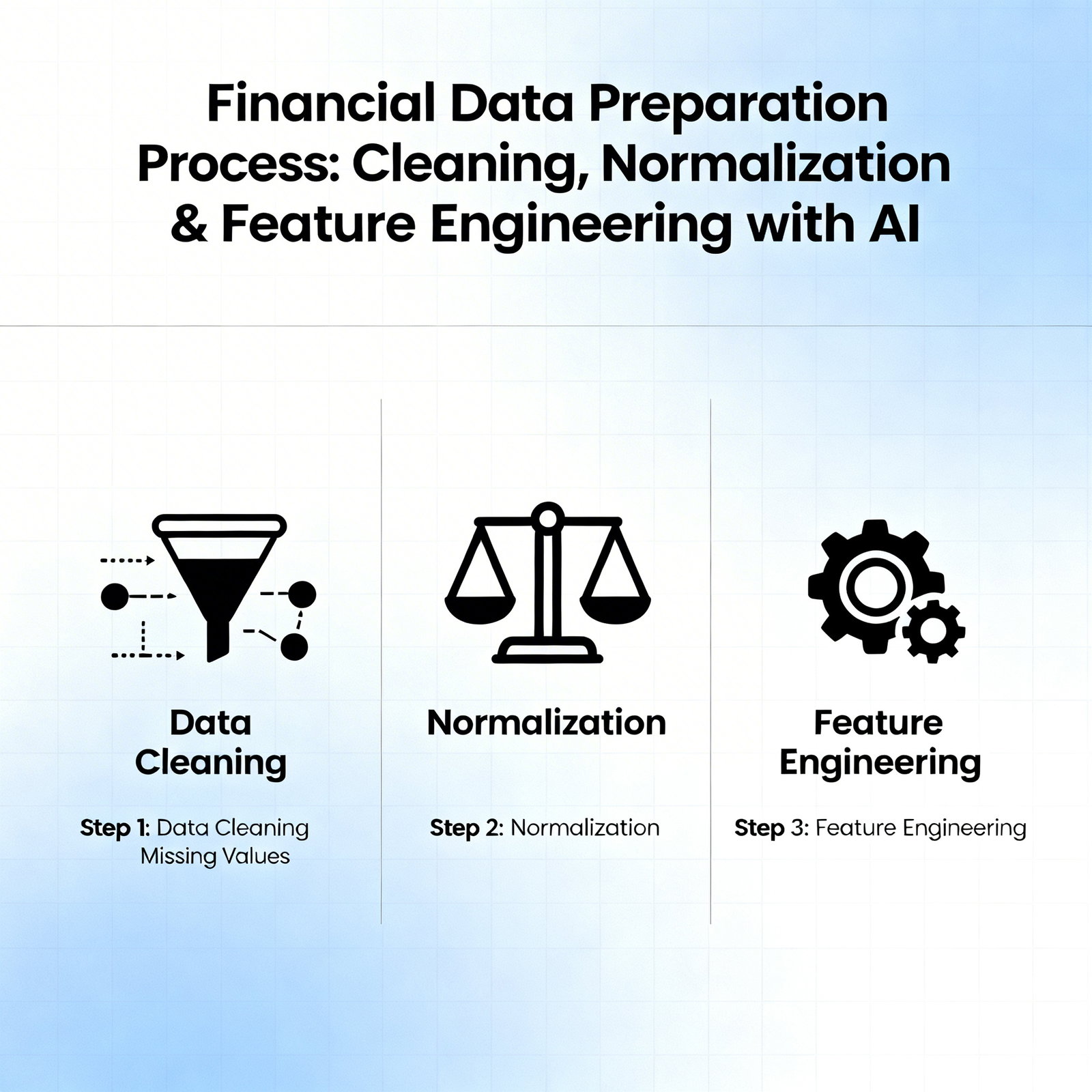
So, how effective are these systems? It largely depends on the quality of the data. That’s why data preprocessing is a step you simply can’t overlook. You cannot conduct meaningful analysis without integrating financial data coming in diverse formats, from ERP systems to bank statements and POS records.
Filling in missing values, removing outlier records, and normalizing data to a universal scale form the backbone of this process. Those who bypass these crucial steps often spend hours baffled as they try to decipher why the model produces inconsistent results.
Feature engineering is also vital at this stage. When variables such as transaction frequency, transaction amount, time of day, and the counterparty's historical behavior are fed into the algorithm, the system makes far more accurate decisions. Improving the model's performance without transforming raw data into meaningful features is nearly impossible. If you’re also intrigued by the operational aspect of accounting, the article Increasing Efficiency in Accounting Processes with AI offers a practical guide on the matter.
Identifying financial anomalies early isn’t just about preventing monetary loss; it also safeguards your business’s reputation and legal standing. Once a fraud case surfaces, regaining customer trust and managing potential sanctions can be far more costly. A proactive approach is always smarter than reactive measures; having a system in place before you learn this lesson the hard way is essential.
If you’d like to explore AI-powered anomaly detection tools, visit aibudur.com. By registering on the platform, you’ll receive 50 free credits to test various AI solutions. It’s an excellent way to help prevent financial losses and create a more secure environment for your business.